
Master Health - Biology _ Omics Data Research and Analysis
I chose the Research and Data Analysis specialization because it is highly versatile: it lies at the intersection of programming, experimentation, and laboratory work. In addition, there are many opportunities available for internships and future employment ! Loubna, Master Innocare
Programme overview :
This specialization offers unique training at the interface of biology, omics technologies, and artificial intelligence. Its main objective is to explore the complex relationships between genes, proteins, metabolites, and other biological molecules using multidimensional approaches and cutting-edge analytical tools
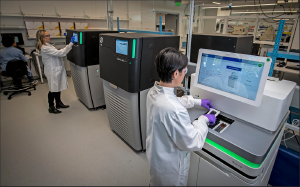
Through the use of omics technologies (genomics, transcriptomics, proteomics, metabolomics, etc.) combined with expertise in artificial intelligence and deep learning, students are trained to analyse large-scale biological datasets in order to generate new knowledge in biology and health sciences.
The programme provides transversal skills applicable to a wide range of research fields, including:
- Oncology, nuclear medicine, and hematology (OHNU Master’s specialisation)
- Immunology and immuno-intervention (I³ Master’s specialisation)
- Innovation in cardiovascular, metabolic, and respiratory diseases (InnoCARE Master’s specialisation)
- Gut–brain–nutrition microbiota research (MICAS Master’s specialisation)
- Regenerative medicine (M4R Master’s specialisation)
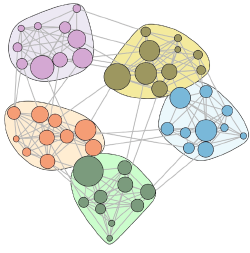 Scientific and Technical Expertise
These technologies require both advanced skills in statistical and computational data analysis and high-level biological expertise.The goal of this specialization is to train biologists working at the interface between experimentation, data analysis, and biological interpretation, capable of generating new hypotheses and insights from complex biological data.
Career Perspective
This program trains experts capable of contributing actively to scientific discovery and addressing complex challenges in modern biology.
It is designed for students interested in: technological innovation, large-scale biological data analysis, advances in medical sciences, personalised medicine.
Graduates will be prepared to work at the intersection of fundamental research, applied research, and clinical science.
First year of master's courses
- Omics 1: Introduction to Omics Technologies
- Omics 2.1: Genomics
- Omics 2.2: Transcriptomics and Proteomics
- Semantic Web
- Scientific English
- Genome Manipulation
- Big Data 1.1
- Big Data 1.2
- Interdisciplinary Project
- Master’s Programme-Specific Courses
2nd year of Master's courses
- Omics 3: Epigenetics
- Systems Biology 1
- Systems Biology 2
- Big Data 2
- Interdisciplinary Research Project
- Master’s Programme-Specific Courses
- Research laboratories
- Companies (R&D) / Biotech companies
- Technological platforms
- Pharmaceutical industry
- Bridge to Digital Technologies and Data Science fields
Why train in data analysis ?
- Understanding biological systems
- Identifying (epi)genetic factors
- Biomarkers/therapeutic targets
- Innovation in biomedical research
- Implementing personalised medicine