
[6 Questions for] Vianney Delplace, NExT Talent Working in Skeletal Regenerative Medicine
https://english.univ-nantes.fr/medias/photo/vianneydelplace_1773410842985
An Inserm researcher at the Regenerative Medicine and Skeleton laboratory (RMeS) in Nantes and NExT Talent laureate since 2019, Vianney Delplace leads the BIOMAX team, which focuses on developing new biomaterials for biomedical applications. Driven by a desire to push research forward in this field and drawn by the professional opportunities the region offers, he shares his unique career path and his goals for the years ahead.
Why did you apply for the NExT Talents call for projects? What motivated you to come to the Nantes University Hospital?
I applied for the NExT Talents call in 2018, while I was still working as a postdoctoral researcher abroad. As a young researcher, it was a unique opportunity to begin building a research group and to give myself the best possible chance of succeeding in the public research recruitment process (Inserm).My main motivation for coming to Nantes was the RMeS laboratory itself. It brings together biomaterials experts, biologists, and clinicians within a single laboratory — something that is unique in France.
What work do you carry out within your team?
Within the RMeS laboratory, I develop hydrogels with innovative properties for a range of biomedical applications, from drug delivery and 3D cell culture to bioprinting. I also co-direct the BIO3 technology platform (biomaterials, biofabrication, and biomechanics), which is dedicated to the synthesis, shaping, and characterisation of biomaterials. 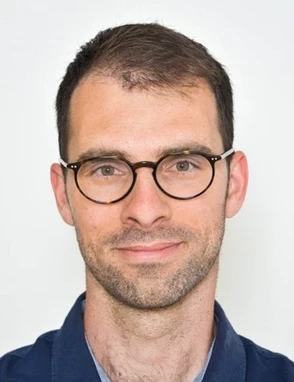
What expertise have you brought to the laboratory?
Trained as a chemical engineer, I brought to the laboratory my skills in polymer chemical modification, the design and characterisation of organic biomaterials, and biomedical engineering.
What scientific advances have you achieved?
My first years at the laboratory were dedicated to developing a series of new hydrogels with highly tuneable compositions and physical properties. One of our injectable hydrogels, based on hyaluronic acid, has been patented and is currently being studied for its potential benefits in the treatment of osteoarthritis, in combination with various therapeutic agents.In 2023, we also published the world's first proof of concept for 4D bioinks. These printable, 4D-tuneable materials, which we developed in the presence of cells, open the door to new applications such as bioprinting.
Finally, we have just filed a patent application for an original controlled-release system designed for the localised and sustained delivery of therapeutic agents.
Joining the RMeS team, which brings together biomaterials experts, biologists, and clinicians within a single laboratory, is truly unique in France.
How do you see the future of your career and your scientific project?
Over the past five years, the RMeS laboratory has recruited a record three Inserm researchers in the field of health technologies. This naturally leads us to consider establishing a dedicated Inserm team focused entirely on biomedical engineering, with a target date of 2028 — a team I would then lead.From a scientific perspective, my group will continue the pre-clinical evaluation of new therapeutic strategies based on the use of biomaterials for the treatment of osteoarthritis.
We will also continue our efforts to develop high-resolution printable biomaterials for the fabrication of in vitro joint tissue models. In the longer term, this work could contribute to reducing animal experimentation and to screening therapeutic agents.
About the NExT I-site
Awarded the label in January 2022, the NExT (Nantes Excellence Trajectory) Initiative of Excellence (I-site) is built around two major priorities — the healthcare of the future and the industry of the future — with a broader impact across all disciplines and strong involvement from the humanities and social sciences.
It aims to establish an innovative trajectory in research, training, and technology transfer, supported by ambitious campus life policies and international attractiveness strategies.
It aims to establish an innovative trajectory in research, training, and technology transfer, supported by ambitious campus life policies and international attractiveness strategies.
More information
Updated on 13 March 2026.