
[6 Questions for] Juan Sandoval, NExT Talent Working in Medical Robotics
https://english.univ-nantes.fr/medias/photo/juansandoval_1773412303992
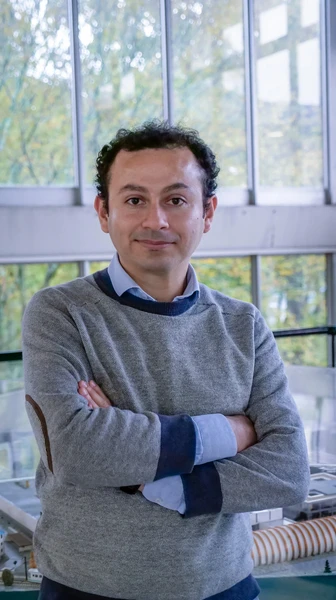
A lecturer at Centrale de Nantes and researcher at the Nantes Digital Sciences Laboratory (LS2N – Nantes Université – CNRS – Centrale Nantes – IMT Atlantique – Inria / RoMaS team), Juan Sandoval is a mechatronics engineer who has specialised in medical robotics. As a NExT Talent laureate, he looks back on his career, his areas of expertise, and his scientific achievements.
Could you briefly introduce yourself and your background?
My research focuses on medical robotics, with a particular emphasis on collaborative robots and physical human-robot interaction. Trained as a mechatronics engineer and holding a doctorate in robotics, my work covers the modelling, design, and control of robotic assistants intended to support practitioners in medical procedures, including minimally invasive surgery, orthopaedic surgery, and percutaneous interventions.Since 2024, I have been leading the NExT Talents project PercuCob, which aims to develop a collaborative robotic assistant for ultrasound-guided percutaneous procedures.
Why did you apply for the NExT Talents call for projects?
The Nantes environment is particularly well suited to a project like PercuCob. At LS2N, it brings together complementary expertise in robotics, medical imaging, and human factors, while benefiting from an excellent hospital ecosystem centred on the Nantes University Hospital (CHU de Nantes).My motivation was twofold. First, I wanted to join a scientific environment capable of supporting an ambitious project at the intersection of robotic modelling, advanced control, and human-robot interaction. Second, I wanted to work closely with clinicians in order to co-develop solutions based on real-world needs. The NExT Talents call represented a key opportunity to build truly interdisciplinary research, with a clear objective: to make percutaneous procedures safer, more precise, and more ergonomic.
 What work have you carried out within your laboratory?
Within LS2N, we have structured the project around three complementary research areas.The first concerns the design of a so-called "macro-mini" robotic architecture, combining a global positioning robot with a fine guidance mechanism that integrates the puncture instrument. In order to tailor the solution as closely as possible to clinical needs, we conducted, in collaboration with the MIP laboratory, the NExT FAME cluster, and practitioners from the CHU de Nantes, a study of medical gestures and their real-world constraints.
The second area focuses on developing collaborative control strategies that enable smooth, intuitive, and safe interaction between the practitioner and the robot. We are working in particular on impedance/admittance approaches and on hybrid position/force control, especially for operating a second robot dedicated to holding and positioning the ultrasound probe.
The third area aims to integrate haptic guidance of medical gestures using information from ultrasound imaging. This builds on internal collaborations with the SIMS team at LS2N, as well as international partnerships, notably with the CAMP laboratory at the Technical University of Munich (TUM).
In parallel, the project has also led to the creation of a medical robotics experimental platform at LS2N, on the Centrale Nantes campus, designed to validate the approaches developed under conditions close to a real clinical setting.
What expertise do you bring?
From a scientific and technical standpoint, I bring expertise in the design and optimisation of robotic systems for medical applications, as well as in control strategies for intuitive and safe physical human-robot interaction. This builds on my research background, as reflected in my scientific publications and my involvement in national and international collaborative projects.My career has also allowed me to develop a strong ability to work closely with hospital practitioners from a range of specialities. Despite the cultural and language differences between the medical world and the world of robotics, I have learnt to analyse clinical needs, understand the constraints of medical procedures, and translate them into concrete and relevant robotic solutions.
It is precisely this usage-centred approach and co-construction with clinicians that I wish to bring and strengthen through the PercuCob project, in order to develop a robotic assistant that is genuinely adapted to hospital practices and real-world needs.
What scientific advances have you achieved?
Since the project launched, we have developed a first version of a macro-mini robotic architecture dedicated to assisting percutaneous procedures, representing a key step in establishing the feasibility of the PercuCob concept. A second version of the guidance robot is currently being designed to improve its performance and to allow integration with ultrasound imaging.Beyond the technical results, the project has had a real structuring effect scientifically: it has helped initiate new interdisciplinary collaborations within LS2N and with the MIP laboratory, and has led to the launch of a jointly supervised doctoral thesis with the Technical University of Munich (TUM), strengthening the project's international reach.
How do you see the future of your scientific career?
My ambition is to continue my research in collaborative medical robotics, developing robotic systems capable of improving the precision, ergonomics, and safety of medical procedures, whilst keeping the practitioner at the centre of decision-making.In the longer term, my goal is to help position the Nantes ecosystem as a major player in the development of the next generation of medical cobots [...] and to open the door to clinical applications that remain largely unexplored in medical robotics.
Building on PercuCob, I plan to explore several research directions, including the design of more versatile and complex robotic solutions capable of assisting procedures involving multiple instruments, closer integration with multimodal medical imaging, and the development of advanced control strategies incorporating intelligent assistance, haptic guidance, and personalisation of the gesture according to the clinical context.
In the longer term, my goal is to help position the Nantes ecosystem as a major player in the development of the next generation of medical cobots — designed as true partners in clinical practice — and to open the door to clinical applications that remain largely unexplored in medical robotics.
About the NExT I-site
Awarded the label in January 2022, the NExT (Nantes Excellence Trajectory) Initiative of Excellence (I-site) is built around two major priorities — the healthcare of the future and the industry of the future — with a broader impact across all disciplines and strong involvement from the humanities and social sciences.
It aims to establish an innovative trajectory in research, training, and technology transfer, supported by ambitious campus life policies and international attractiveness strategies.
It aims to establish an innovative trajectory in research, training, and technology transfer, supported by ambitious campus life policies and international attractiveness strategies.
Updated on 13 March 2026.