Labex IMAF

IMAF (Agile Manufacturing Industry of the Future), a certified Labex since December 2024 as part of the NExT I-SITE project funding call, is an interdisciplinary, intersectoral, multi-scale laboratory of excellence. IMAF is designed to address the emerging challenges of Industry 5.0. Led by a consortium of five laboratories working closely with the human and social sciences, as well as with local socio-economic stakeholders, IMAF is a catalyst for innovation and transformation.
Its mission is to predict and question the future needs of manufacturing industry, with the aim of making processes more agile and sustainable. IMAF’s broad scope and purposefully exploratory approach make it able to focus on innovative and under-explored research topics.
The project’s multidisciplinarity enables the creation of unprecedented synergies and fosters the emergence of new interdisciplinary themes. IMAF’s international profile is boosted by the involvement of renowned researchers and cutting-edge industrial companies, paving the way for strategic partnerships with leading research and innovation establishments.
Laboratories involved:
- CEISAM Institute – Interdisciplinary Chemistry: Synthesis, Analysis, Modelling - CEISAM (UMR 6230)
- GeM – Research Institute in Civil and Mechanical Engineering - GeM (UMR 6183)
- GEPEA – Process Engineering - Environment - Food Laboratory - GEPEA (UMR 6144)
- IMN – Institute of Materials Jean Rouxel - Nantes - IMN (UMR 6502)
- LS2N – Nantes Digital Sciences Laboratory - LS2N (UMR 6004)

Contact
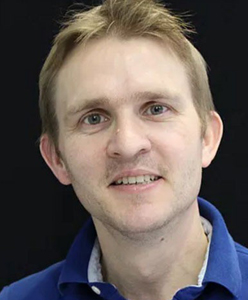
Stéphane CARO,
Head of Labex IMAF
Nadine ALLANIC,
Deputy Director of Labex IMAF
Constantin ILASCA,
Projet Manager, Labex IMAF

New technologies are transforming the manufacturing industry by offering greater efficiency and improved customer service through automation and AI. Intelligent sensors optimise production, maintenance and risk management, ensuring a swift return on investment.
The industry of the future will be digital, intelligent, human-centred and sustainable. It will also be based on agility, the Industrial Internet of Things (IIoT) and cobotics. The IMAF project explores man-machine collaboration and autonomous decision-making for complex tasks, putting humans back at the heart of the process.
The project focuses on five challenges:
- Manufacturing as a service
- Agile robotics
- Digital twins
- Human factors
- Industrial processes
Labex IMAF’s challenges are defined by 5 challenges:
- Challenge 1: Manufacturing as a service for open, modular, agile and circular industries at national and local levels
- Challenge 2: Scalable, frugal, autonomous robots capable of interacting safely with humans in dynamic environments
- Challenge 3: Complete, operational digital twin for managing quality, industrial performance and environmental and operator impacts
- Challenge 4: A human-centred factory to facilitate cooperation between humans and machines, improving operator performance and comfort
- Challenge 5: Advanced digitised industrial processes using metallic, chemical, polymer and composite materials enable agile, on-demand and sustainable production
The Labex IMAF project is supported by HEMI, FAISTOS and MAD4AM, all research clusters at the forefront of industry and innovation in the Nantes area.
IMAF relies on a number of international partnerships that are either already established or have the potential to become so:
- Delft University, Netherlands
- Queensland University of Technology, Australia
- TU Berlin, Germany
- TUM, Munich, Germany
- Politecnico di Milano, Italy
- Aalborg University, Denmark
- Institute for Manufacturing of Cambridge, United Kingdom
- École de technologie supérieure (ÉTS), Montreal
- University of Duisburg-Essen, Germany
- Laval University, Quebec City, Canada
- McGill University, Montreal, Canada
- The Chinese University of Hong Kong, China
- Monash University, Australia
- Shanghai Jiao Tong University (SJTU), China
- Stevens University, USA
- Tsinghua University, Beijing, China
- Atlantic Technological University (ATU), Ireland
- Keio University, Japan
Key dates
- 14 May 2025: IMAF launch
- 6 June 2025: Call for projects for the first wave of doctoral theses (co-)funded by IMAF
- Early September 2025: IMAF seminar